Norwich is normally a quiet, well-organised city. On 24 April 1648 it tore itself apart in about twenty seconds flat.
The English Civil War didn’t end in 1646. It paused. By the spring of 1648 the country was sliding into a second war and Norwich — Royalist in sympathy, Roundhead in administration — was a city sitting on a fuse.
That fuse caught on a Monday.
The Mayor and the mob
Norwich’s Royalist Mayor, John Utting, had been arrested by Parliament earlier in the year for the crime of allowing the Book of Common Prayer to be read in city churches. On the morning of 24 April 1648 a delegation of Norwich citizens went to the Committee House — the local seat of Roundhead administration, on what is now Bethel Street — to demand his release.
The delegation became a crowd. The crowd became a riot. By the afternoon several thousand Norwich men and women were besieging the Committee House, throwing stones, and trying to force the doors. Inside, the Roundhead Sheriff retreated upstairs.
The magazine
What nobody outside the building knew — or, possibly, the rioters knew exactly — was that the Committee House was being used as the magazine for the Norwich garrison. The back rooms were stacked with the city’s gunpowder.
A few minutes after four o’clock in the afternoon, the powder went up.
The Great Blow, as it is still called in Norwich, killed somewhere between forty and a hundred and twenty people. The exact figure has never been agreed. The blast was reported as far away as Wymondham, nine miles south. It blew out every window in St Peter Mancroft, the church on the market square. Stained glass that had survived the Reformation, the Tudors and four hundred years of Norfolk weather was destroyed in a single afternoon.
Witnesses described bodies thrown over rooftops and into the river. The Committee House ceased to exist; a crater appeared where it had stood.
Where you can still see it
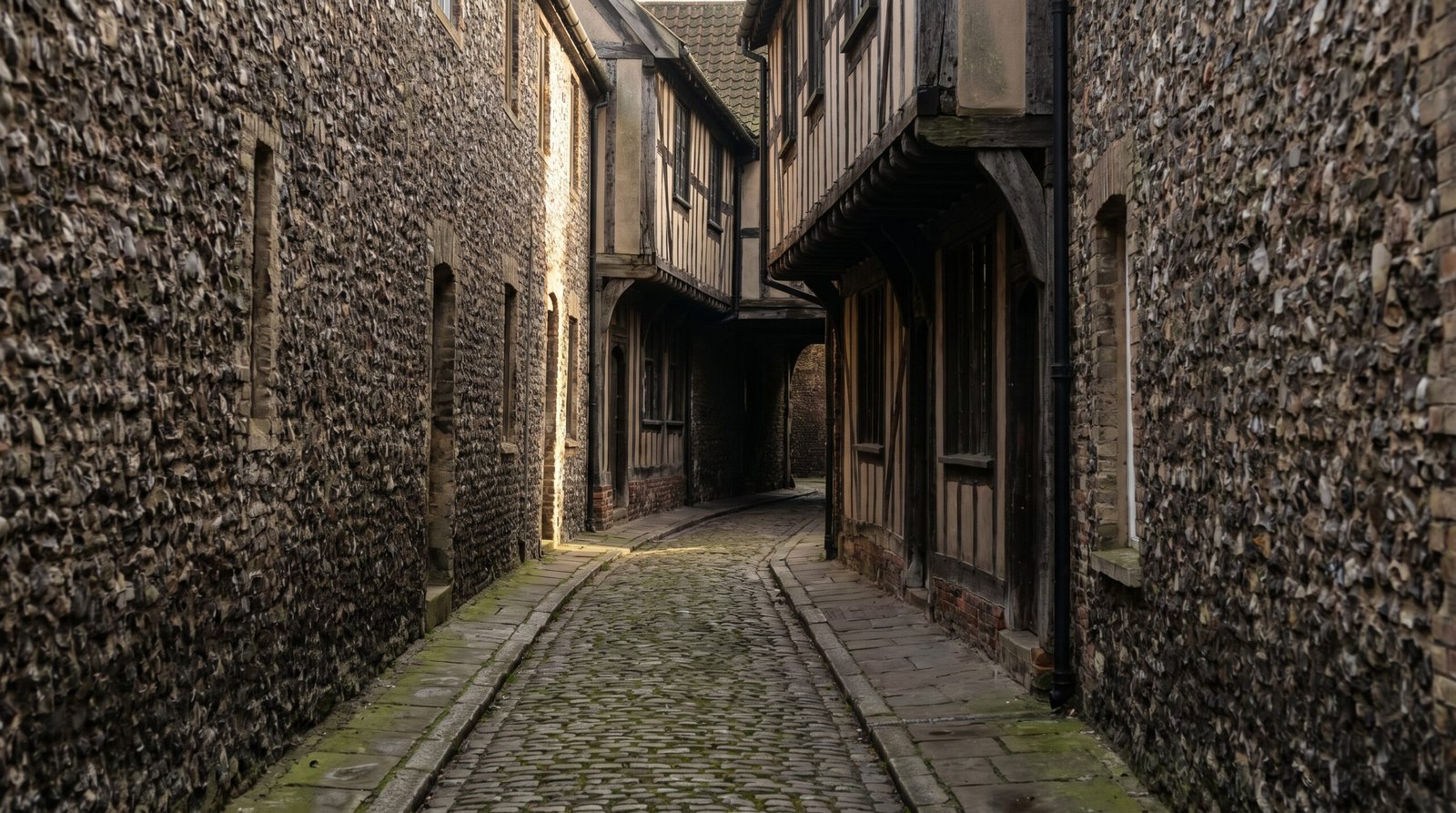
Norwich rebuilt around the hole. But the scars remain if you know where to look.
Bethel Street. The site of the Committee House lies a few yards back from the current pavement of Bethel Street, near where the police station now stands. There is no plaque. Locals park their cars over the spot.
St Peter Mancroft. Set into the masonry above the south porch is a small carved stone commemorating those who died “by the late dreadful accident” of 24 April 1648. It is roughly chest height. Most people walking through the door never look up.
The Royalist accounts in the Norfolk Record Office. Eyewitness statements from the day — the rioters who survived, the soldiers inside the building, the Sheriff who lost his hearing in the blast and never recovered it — were collected by Parliament for the trials that followed. The originals are still in the archives on Martineau Lane. You can request to see them. Almost no one does.
The market itself. Stand on the steps of City Hall and look down into the market square. The Committee House was about three hundred yards to your right; the church damaged by the blast is directly in front of you. The Great Blow happened in this exact rectangle of air.
The footnote
Mayor Utting was released by Parliament four months later, his cause arguably vindicated by the chaos his arrest had caused. He returned to civic life and survived until the Restoration. The Roundhead Sheriff who’d been inside the Committee House survived too. He spent the rest of his life in Norwich, deaf in both ears.
Norwich is a quiet city. It is quiet because, on the whole, it has been quiet for almost four hundred years since 24 April 1648.
Walk the Civil War scars yourself
If you want to navigate Norwich with the dates and the doors in your pocket, our Norwich Detective Scavenger Hunt sends clues by WhatsApp from a starting point at Norwich Castle. £20 covers your whole group. No app, no booking slot. Cases run 90 to 120 minutes and thread through the alleys, courts and corners most people walk past without noticing.
The streets are not what they appear.
Not ready to walk yet?
Get the next case from Norwich’s hidden history straight to your inbox. Once a month. No spam. Unsubscribe in one click.
Or, if Cambridge is more your beat: 10 hidden corners of Cambridge most tourists walk past.